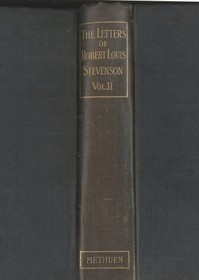
Stevenson’s correspondence in this volume is marked by a restless oscillation between domestic intimacy and geographical distance. From Bournemouth’s sickbed to Sydney’s club, he writes with a voice that is at once confiding and performative, blending playful self-mockery with acute professional calculation. The letters to his family and friends—including Henry James and Sidney Colvin—are not merely personal records but crafted literary acts, full of strategic silences and pointed requests. A recurring tension emerges between the desire for connection and the necessity of isolation, as Stevenson measures his health against the climates he inhabits.
Sickbed and Style
Stevenson’s physical condition is a constant undercurrent, but he rarely dwells on it without a wry deflection. In a letter to Alison Cunningham, he calls himself “a very bad dog” for delaying a thank-you, then blames a cold that left him “fit for nothing whatever.” The illness is both an excuse and a fact, treated with a lightness that undercuts self-pity. To Henry James, he writes from a Sydney club: “I have not been out since my arrival; live here in a nice bedroom by the fireside.” The detail is precise—the fireside, the bedroom—yet the tone is almost cheerful. Stevenson’s style thrives on such contrasts: he is bedridden but busy, isolated but engaged. His letters often pivot from physical complaint to literary business, as when he tells James he is “fasting from all but sin, coughing, The Bondman, a couple of eggs and a cup of tea.” The list mixes the mundane and the intellectual, collapsing bodily limits into creative life.
The Publisher as Adversary
Stevenson’s dealings with publishers reveal a shrewd, sometimes exasperated professional. In a letter to Sidney Colvin, he lays out three options for a manuscript of ballads, each phrased with mock formality: publish as a volume, ask for more, or declare the whole thing “a blooming illusion.” The ultimatum is playful but pointed, exposing his frustration with silence from London. He complains that his publisher “holds his tongue,” and threatens to vent his animosity in a future novel: “wait till you see the continuation of The Wrecker, when I introduce some New York publishers.” This is not mere gossip; it is a writer using correspondence as a pressure valve and a strategic tool. The letters show Stevenson negotiating from a distance—geographical and professional—and using humor to mask the anxiety of an author who cannot consult anyone in person. His requests for books and proofs are laced with impatience, as when he asks Colvin to send papers “quam primum.”
Exile as Preference
Stevenson’s self-description as an exile is complicated by his insistence that he prefers it. To Henry James, he declares: “I simply prefer Samoa.” The statement is carefully hedged—he is sorry for “seven or eight people in England”—but the conviction is clear. He contrasts his love of the sea with a disaffection for “towns, houses, society, or (it seems) civilisation.” The parentheses are telling: he is revising his own identity as he writes. He notes that even his wife has “weakened about the sea,” wearying to get afloat again. This detail humanizes the grand claim, grounding it in shared experience. Stevenson’s letters from the Pacific do not romanticize the islands; they describe a practical contentment. He admits to impatience on long voyages but insists he “never wearied” of blue water. The tension between longing for home and choosing distance is never resolved—it is held in suspension, made bearable by the act of writing itself.
These letters reward a reader attentive to tone and subtext. Stevenson’s voice shifts between intimacy and performance, and his silences—about health, about money, about the future—are as telling as his confessions. The volume offers not a continuous narrative but a series of strategic disclosures, each shaped by its recipient. To read them is to watch a writer managing distance, illness, and ambition with the same tool: the letter itself.
I’ve spent many evenings with Stevenson’s letters, that wry, brave voice wrestling with illness and far shores, always finding a bit of humor in the wreckage. It reminds me of the quiet essays in Decadence, and Other Essays on the Culture of Ideas — Edition Insights, where ideas are handled like old, fragile things—tenderly, without hurry. Both feel like letters from a patient friend.