About 386 minutes
Practical Essays — Reading Notes
Historical Psychological Social Fiction
88,617 recorded words. 4 minutes difference from this book's estimate.
View Gutenberg source #17522
Before opening Lay Morals, and Other Papers — Context and Discussion, the edition data offers a quick orientation: 87,783 words, 6 hr 22 min estimated reading time, and 7 detected text sections.
The text analysis averages about 23.5 words per sentence, while the detected sections provide another way to judge how the source is divided.
Project Gutenberg metadata also associates the work with “Essays,” connecting these edition facts with the source record’s subject description.
Explore this collection
These alternatives are selected using recorded categories and estimated reading time.
About 386 minutes
Historical Psychological Social Fiction
88,617 recorded words. 4 minutes difference from this book's estimate.
View Gutenberg source #17522About 413 minutes
Historical Psychological Social Fiction
94,829 recorded words. 31 minutes difference from this book's estimate.
View Gutenberg source #16643About 432 minutes
Historical Psychological Social Fiction
99,304 recorded words. 50 minutes difference from this book's estimate.
View Gutenberg source #8210Search stored excerpts and compare books → Choose by your preferences →
Choices use stored catalog measurements. Estimates vary with reading speed. A shared category is a catalog label, not a claim that two books have the same argument or literary quality.
Search reads excerpt text stored with this catalog and links to its associated Gutenberg record. The connection is stored in the site database; this tool does not recheck that every excerpt is word-for-word identical to that external record. Excerpt search does not cover every chapter and does not verify historical publication dates.
Catalog snapshot checked: 2026-09-25. Coverage: 92 public books, 92 available source excerpts.
Read the complete public-domain text at its original source.
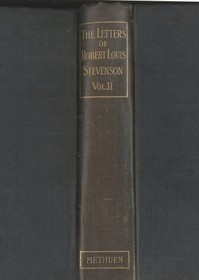
Read on Project GutenbergThe volume opens with a preface by Fanny Van de Grift Stevenson that recounts a tense encounter in the Marquesas: her husband accepts a cigarette from a leper, then smokes it despite his own revulsion. This anecdote, with its quiet emphasis on courage and human dignity, sets a moral tone that resonates through the essays that follow. Stevenson’s own prose ranges from the solemn to the mischievous, as when he dissects the absurdity of names in a mock-scholarly treatise on onomastics.
Fanny Stevenson’s preface is not a biographical summary but a series of sharp vignettes. She describes a mother who dismisses leprosy contagion, a sick girl handled with dread, and her husband’s insistence on not mortifying a stranger. The writing is restrained, letting actions speak: Stevenson takes the cigarette, later confesses he did not want to, and the couple talk of Father Damien. The preface grounds the book’s ethical concerns in lived experience, without moralizing.
In one essay, Stevenson playfully argues that a person’s name can determine their fate. He cites poets with “lordly words” (Chaucer, Shakespeare) and imagines Samuel Pepys barred from poetry by his surname. The piece is structured as a mock-systematic theory, complete with a proposed “Godfather’s Assistant” dictionary. Stevenson’s tone is ironic, yet he makes a serious point about social perception: a name like “John Milton Hengler” drives a man to the tightrope instead of epic verse.
The title essay, “Lay Morals,” shifts to a more earnest register. Stevenson examines conscience, duty, and the gap between principle and action. He avoids abstract systems, instead offering aphoristic observations: “I could not mortify the man” echoes from the preface. The prose is dense with short, declarative sentences and occasional rhetorical questions. The essay does not resolve into a tidy code but insists on the complexity of moral life.
Stevenson moves abruptly from the anecdotal to the analytical, from the Pacific islands to the London literary scene. The preface’s concrete scenes give way to abstract arguments, then to whimsical catalogues of names. This structural variety mirrors his method: he tests ideas by shifting contexts, never settling into a single voice. Readers should expect sudden transitions and a willingness to treat serious subjects with a light touch.
The collection rewards attention to its framing: Fanny’s preface is not a mere introduction but a key to Stevenson’s ethical imagination. The essays that follow amplify its themes through different keys—comic, earnest, speculative. For readers interested in how Stevenson’s fiction and his moral essays inform each other, this volume offers a compact, revealing cross-section of his mind.
The rain tapped its fingers against the slates while I read Stevenson’s earnest wrestling with duty, his wit warming the damp air. Fanny’s preface made it feel like a private conversation, one I wasn’t ready to end. So I reached for something else, and found Miscellaneous Studies; a series of essays — Themes and Context, a quieter echo of that same searching voice.
Your answers remain private and are stored only in this browser.