About 329 minutes
Reflections and Comments 1865-1895 — A Reader’s Guide
Science Fiction Utopias
75,494 recorded words. 1 minutes difference from this book's estimate.
View Gutenberg source #7257
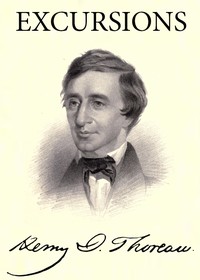
This digital edition of Excursions — Themes and Context is described by source-level measurements including 75,839 words, 5 hr 30 min estimated reading time, and 11 detected text sections.
The text analysis averages about 26.1 words per sentence, while the detected sections provide another way to judge how the source is divided.
Project Gutenberg metadata also associates the work with “Essays,” connecting these edition facts with the source record’s subject description.
Explore this collection
These alternatives are selected using recorded categories and estimated reading time.
About 329 minutes
Science Fiction Utopias
75,494 recorded words. 1 minutes difference from this book's estimate.
View Gutenberg source #7257About 306 minutes
Science Fiction Utopias
70,306 recorded words. 24 minutes difference from this book's estimate.
View Gutenberg source #71260About 359 minutes
Science Fiction Utopias
82,441 recorded words. 29 minutes difference from this book's estimate.
View Gutenberg source #76229Search stored excerpts and compare books → Choose by your preferences →
Choices use stored catalog measurements. Estimates vary with reading speed. A shared category is a catalog label, not a claim that two books have the same argument or literary quality.
Search reads excerpt text stored with this catalog and links to its associated Gutenberg record. The connection is stored in the site database; this tool does not recheck that every excerpt is word-for-word identical to that external record. Excerpt search does not cover every chapter and does not verify historical publication dates.
Catalog snapshot checked: 2026-09-25. Coverage: 92 public books, 92 available source excerpts.
Read the complete public-domain text at its original source.
Read on Project GutenbergThoreau opens 'Walking' by declaring that he 'cannot preserve my health and spirits, unless I spend four hours a day at least—and it is commonly more than that—sauntering through the woods and over the hills and fields, absolutely free from all worldly engagements.' This insistence on prolonged, aimless movement sets the tone for a collection that repeatedly pits the claims of society against the pull of wild nature. Emerson's biographical sketch, which precedes the essays, frames Thoreau as a 'born protestant' who refused conventional employment to pursue 'the art of living well.' The tension between indoor obligation and outdoor liberation runs through every piece, from the measured natural history of Massachusetts to the lyrical celebration of wild apples.
In 'Walking,' Thoreau distinguishes his activity from mere exercise: 'the walking of which I speak has nothing in it akin to taking exercise, as it is called, as the sick take medicine at stated hours.' He insists that true walking is 'the enterprise and adventure of the day.' The essay builds a contrast between those who stay indoors—growing 'vespertinal' with age—and those who venture out to 'the springs of life.' Thoreau's walker must 'return to his senses,' shaking off the village and its obligations. He even imagines the houses of his neighbors as empty shells, their occupants 'all gone to bed' while the architecture stands 'erect, keeping watch over the slumberers.' This inversion of domestic and wild values recurs throughout the collection.
'Natural History of Massachusetts' and 'The Succession of Forest Trees' demonstrate Thoreau's method of close observation wedded to philosophical reflection. He notes the habits of fish, birds, and trees not as a detached cataloguer but as someone seeking 'the poetry and the truth of Nature.' In 'Wild Apples,' he traces the history of the apple from its wild origins to cultivated orchards, arguing that the 'sour and harsh' wild fruit contains more 'life and spirit' than its domesticated kin. The essays repeatedly return to the idea that wildness—in landscapes, plants, or human character—is a source of vitality that civilization threatens to tame.
Emerson's biographical sketch, written after Thoreau's death, presents a man of 'rare decision' who 'never faltered' in his refusal of conventional paths. Yet the sketch also records a telling anecdote: after perfecting a lead pencil, Thoreau declared he would never make another, asking 'Why should I? I would not do again what I have done once.' This impulse toward perpetual novelty aligns with the essays' celebration of the new and the wild. But Emerson also notes that Thoreau was 'incurious of technical and textual science,' preferring direct acquaintance with nature. The portrait thus reinforces the collection's central tension between systematic knowledge and lived experience, a tension Thoreau himself explores in his walking and writing.
Readers approaching 'Excursions' will find not a unified argument but a series of experiments in attention. Thoreau's prose moves between precise natural description and aphoristic reflection, often within the same paragraph. The essays reward slow reading—perhaps best done out of doors, with the book in hand and a path nearby. Emerson's sketch provides a useful frame, but the real interest lies in watching Thoreau think on the page, testing his own convictions against the stubborn facts of woods, weather, and wild apples.
When I shelve Excursions — Themes and Context, I think of Thoreau's quiet step into the woods, that gentle drift from the hearth. Essays and soliloquies — Text and Context holds Montaigne's similar pause at his own window, an inner saunter. Both seem to whisper that the truest journeys need no road, only a willing, unhurried mind.
Capture what you thought, learned, and would like to remember.