
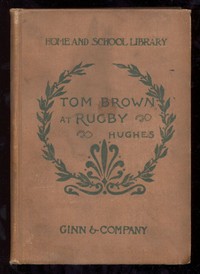
Tom Brown at Rugby by Thomas Hughes
Let's be clear from the start: 'Tom Brown at Rugby' is a foundational book. Published in 1857, it basically created the template for every boarding school story that came after it. But don't let that make it sound dusty. At its heart, it's a deeply personal, often tense story about growing up.
The Story
We follow Tom Brown, a hearty, honest country boy, as he starts his new life at Rugby School. The world he enters is governed by its own strict and often harsh rules. Older boys have absolute power over the younger ones, and 'fagging' (acting as a servant to an upperclassman) is a way of life. Tom finds a fast friend in the clever, gentle Harry 'Scud' East, and together they face the trials of school. The central conflict comes in the form of the cruel bully Flashman, who makes their lives miserable. The story charts Tom's journey from a boy simply trying to get by and have some fun, to a young man learning about responsibility, courage, and the true meaning of 'muscular Christianity'—a concept promoted by the school's real-life headmaster, Dr. Thomas Arnold, who appears as a character. It's about standing up for the weak, leading by example, and finding your moral compass.
Why You Should Read It
I'll be honest, some parts of this book are tough to read by modern standards. The hazing is severe, and the attitude toward what makes a 'man' is very much of its time. But that's also why it's so fascinating. It's a raw, unfiltered look at 19th-century boyhood and the educational ideals that shaped generations of British leaders. Beyond the history, Tom's struggle is timeless. His desire to be liked, his loyalty to his friends, his simmering anger at injustice, and his slow dawning of what real strength looks like—these are all feelings we recognize. The friendship between Tom and East is wonderfully portrayed, full of unspoken understanding and solid support.
Final Verdict
This book is perfect for anyone who loves a classic coming-of-age tale, historical fiction fans curious about Victorian life, or readers who enjoyed the school dynamics in series like 'Harry Potter' and want to see where that tradition began. It's not a light, easy read—it asks you to think about tough questions of morality and authority—but it's an incredibly rewarding one. You're not just reading a story; you're witnessing the birth of a whole genre and getting a front-row seat to a pivotal moment in the history of childhood.
This historical work is free of copyright protections. You can copy, modify, and distribute it freely.
Nancy Anderson
2 years agoI've gone through the entire material twice now, and the chapter on advanced strategies offers insights I haven't seen elsewhere. I’ll definitely be revisiting some of these chapters again soon.
Linda Martinez
2 months agoI wanted to compare this perspective with traditional views, the narrative arc keeps the reader engaged while delivering factual content. Well worth the time invested in reading it.
Ashley Miller
1 year agoI stumbled upon this title during my weekend research and the objective evaluation of the pros and cons is very refreshing. I'll be citing this in my upcoming project.
Kimberly Lopez
2 months agoIf you're tired of surface-level information, the argument presented in the middle section is particularly compelling. This is a solid reference for both beginners and experts.



Michael Wilson
1 year agoThis is now a staple reference in my professional collection.