
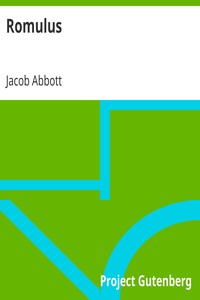
Romulus by Jacob Abbott
Jacob Abbott's Romulus takes the legendary founding of Rome and treats it with the seriousness of a historical biography. Written in the 19th century, his style is clear and direct, pulling you straight into the world of ancient Latium without getting bogged down in overly complex language.
The Story
The book starts with the dramatic origin: the twin babies Romulus and Remus, sons of the god Mars, are condemned to death by a fearful king and set adrift on the Tiber River. Miraculously, they are saved by a she-wolf who nurses them, and later raised by a shepherd. As adults, their royal blood and bold natures lead them to overthrow the king who wronged them. But when they decide to build a new city, a fatal disagreement arises over where to build it and what to name it. This sibling rivalry explodes into a tragic conflict, ending with Romulus killing Remus. From this bloody start, Romulus becomes the sole founder, establishing Rome's first laws, government, and military spirit, shaping the raw, aggressive character of the city from its very first day.
Why You Should Read It
What I love about Abbott's take is how he frames the myth. He presents the wild tales—the divine parentage, the wolf—alongside practical explanations of what might have really happened. It feels like you're examining the evidence alongside him. The heart of the book isn't just the action; it's the chilling portrait of Romulus himself. Abbott shows us a man driven by a profound, almost ruthless, sense of destiny. His relationship with Remus is a powerful study of how shared beginnings can splinter under the weight of ambition. You're left thinking about the price of building something eternal and the dark foundations of even the most glorious civilizations.
Final Verdict
This is a perfect pick for anyone curious about ancient history but wary of dry textbooks. It's also great for fans of mythology who want to see a familiar story explored in deeper detail. Because it's short and written so clearly, it's a fantastic introduction to Rome's origins. You won't get a modern, critical analysis here—it's a product of its time—but you will get a compelling, story-driven account that makes a 2,700-year-old legend feel immediate and human. Think of it as a focused character study of the man who started it all.
The copyright for this book has expired, making it public property. Knowledge should be free and accessible.
Anthony Harris
11 months agoHaving read this twice, the flow of the text seems very fluid. Exactly what I needed.
Michael Jones
9 months agoFrom the very first page, the arguments are well-supported by credible references. Thanks for sharing this review.
Amanda Thompson
2 years agoFast paced, good book.






Aiden Jackson
11 months agoSurprisingly enough, the depth of research presented here is truly commendable. Exceeded all my expectations.