
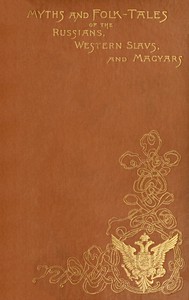
Myths and Folk-tales of the Russians, Western Slavs, and Magyars by Jeremiah Curtin
The Story
This isn't one long story. It's a bunch of short ones, like a greatest-hits album from parts of Europe a hundred years ago. Jeremiah Curtin wasn't just picking up fairy tale books—he traveled to remote villages in Russia, among Western Slavs like the Poles and Czechs, and to Hungarian (Magyar) communities. He sat with actual farmers and old women and listened to how they told their children goodnight. So you get a huge mix: princes riding firebirds, girls who have to solve impossible riddles, men who bargain with demon-like figures for magic powers, and ugly-duckling tales where a beast turns out to be a prince waiting for a kiss. There's no central mystery—the mystery is the world itself. Why do the dead rise in haunted castles? How does a brother break a snake-husband’s curse? Each tale feels like it carries ancient advice whispered around a spinning wheel.
Why You Should Read It
Because it’s honest. Curtin didn’t clean up these stories to make them sweet for Victorians—they still keep the weird bits: the talking horses, the vengeful dead, food that gives (or steals) life, and ladies who refuse to be one thing. I love how brutal and familiar they feel at the same time. The characters are less like perfect heroes and more like real people trying not to get eaten. There’s also this beautiful humor where a dumb peasant outruns a trickster just by running real fast, or where a curse breaks because a character gets distracted. It’s the magical realism of the truly non-literary world—old wisdom hidden in a tale with teeth. Every time a clever woman uses her wits, or a husband breaks a promise, I felt like I was glimpsing how our great-great-grandparents taught kids the law, the risk, and the fun of human life.
Final Verdict
This is for people with a wild imagination and maybe a wee bit of patience. You need to love earthy, detailed stories that aren't all neatly packaged for modern Disney standards. Perfect for enthusiasts of Slavic and Hungarian culture, for students of mythology who want the raw text, and for anyone craving darker, lovelier bed-time reading. If you’ve already read the Brothers Grimm and want something more far-flung and ancient, grab Jeremiah Curtin’s dispatches from the borders of Europe. Read one tale a night, and let your mind build that birch forest and cracking fire where these tales were born.
This historical work is free of copyright protections. It is now common property for all to enjoy.
Christopher Lee
2 years agoFinally found a version that is easy on the eyes.








George Gonzalez
9 months agoI've been looking for a reliable source on this topic, and the logic behind each conclusion is easy to follow and verify. Finally, a source that prioritizes accuracy over hype.