
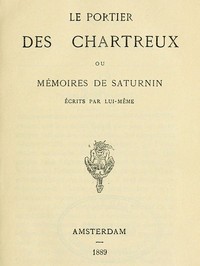
Le portier des Chartreux, ou mémoires de Saturnin écrits par lui-même
Let's be clear from the start: this isn't your typical classic. Le Portier des Chartreux (The Porter of the Chartreux) is a notorious piece of 18th-century French literature, famous for being banned and considered wildly obscene in its day. Reading it now, it feels less like pure smut and more like a sharp, satirical jab at the hypocrisy of the time, wrapped in a very, very naughty package.
The Story
The book is framed as the secret memoirs of Saturnin. As a young man down on his luck, he lands a unique job: he becomes the porter at a convent for the sisters of the Chartreux order. His little room by the gate gives him a front-row seat to everything. He witnesses the comings and goings of the nuns, their visitors, and the tangled web of relationships hidden from public view. The plot follows Saturnin's adventures and observations as he becomes an unwilling confidant and sometimes a participant in the secret romantic and sexual lives of the women inside. It's a chain of linked episodes revealing the stark contrast between the strict religious rules of the convent and the very human desires flourishing in secret.
Why You Should Read It
Look past the scandalous reputation. What grabbed me was the sheer audacity of the perspective. Saturnin is the ultimate outsider-insider. He's not a nobleman or a philosopher; he's a regular guy with a ringside seat to the elite's private failings. The book uses his voice to mock the era's obsession with appearances. Everyone is putting on a show of virtue, but behind closed doors, it's a different story. It's less about the specific acts described and more about the gleeful exposure of hypocrisy. It’s a historical document that doesn't feel dusty—it feels mischievous and alive, poking fun at authority and social pretense with a wink.
Final Verdict
This book is not for everyone. It's explicit by 18th-century standards (and can still raise eyebrows). But if you're a reader interested in the shadowy side of history, the origins of the novel as a form, or satirical literature that takes no prisoners, it's a must. Think of it as a historical thriller about secrets, not a romance. Perfect for fans of books like Fanny Hill who want context, or anyone curious about the banned books that shaped literary history. Approach it with an open mind for its historical value and its bold, unflinching voice.
The copyright for this book has expired, making it public property. Access is open to everyone around the world.
Linda Thompson
7 months agoHaving explored several resources on this, I find that it manages to maintain a consistent flow even when discussing difficult topics. Top-tier content that deserves more recognition.
William Rodriguez
11 months agoAfter a thorough walkthrough of the table of contents, it addresses the common misconceptions in a very professional manner. I am looking forward to the author's next publication.
Emily Martin
2 years agoExtremely helpful for my current research project.
Matthew Davis
10 months agoA sophisticated analysis that fills a gap in the literature.








Sarah Rodriguez
2 years agoMy first impression was quite positive because the way the author breaks down the core concepts is remarkably clear. I appreciate the effort that went into this curation.