
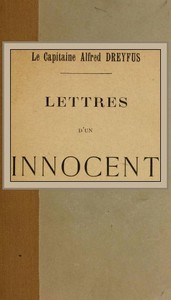
Lettres d'un innocent by Alfred Dreyfus
This book is a gut-punch from history that still feels incredibly alive.
The Story
In 1894, Alfred Dreyfus, a Jewish French army captain, was wrongfully convicted of selling military secrets to Germany. Stripped of his rank in a public ceremony, he was shipped off to Devil’s Island, a harsher version of Alcatraz surrounded by sharks and brutal heat. ‘Lettres d'un innocent’ is the collection of letters he wrote from his cage to his wife, his family, and his lawyers between 1895 and 1899. There’s no grand plotting—just day-to-day survival: the bugs, the heat, the silence that ‘listens with its mouth.’ He keeps fighting, not with a sword, but with reasons, documents, and desperate pleas for someone—anyone—to believe him. Over time, these letters didn’t just tell a man’s story; they sparked a movement called ‘the Dreyfus Affair’ that split France wide open. Émile Zola joined the fight, raging in an open letter titled ‘J’accuse…!’ but Dreyfus couldn’t read any of it on his rock. He wrote hoping, and we get to read what hope feels like on paper.
Why You Should Read It
Because this isn’t a dusty textbook read. These are real, urgent messages from a guy who’s chained to a bed at night and screams into the ocean by day. You see him worrying about his finances, his kid’s education, and whether his wife still remembers his laugh. The tone can be dry—he’s careful not to incite his captors—but the ache underneath? Gold-like intense. You won’t find battlefield heroics or clever detective twists. What you have here is something rarer: a man who refuses to stop being human even when everything tries to break his spirit. For modern readers, themes of systemic bias and bullying echo loud and clear. Anyone who’s felt targeted by a powerful group—or loved someone swamped by bureaucracy—will get chilly deja vu. It’s also brilliant for sparking deeper conversations; share one letter at a dinner party and watch people simmer.
Final Verdict
If you love stories that turn injustice into rock-solid conviction, pick this up. Perfect for history buffs examining France’s past (and present), human rights advocates studying miscarriage of justice memoirs, or just anyone who needs a dose of un-pretty, un-theatrical determination. But hopent escape—this ain’t dramatic fiction. It’s a full-volume listen to the silence of an island cell, told in one voice that believed, barely, in the rule of law. Some call it ‘dated’ and ‘repetitive’ with a stiff prose-as-defence style, but today it crackles like raw recording from our own timeline of overcorrection. It makes you think: where does endurance live in the human chest? That always needs chewing over—by you, by anyone breathing.
This is a copyright-free edition. You do not need permission to reproduce this work.
Charles Miller
3 months agoComparing this to other titles in the same genre, the transition between theoretical knowledge and practical application is seamless. I am looking forward to the author's next publication.
Matthew Anderson
9 months agoThe layout of the digital version made it easy to start immediately, the author doesn't just scratch the surface but goes into meaningful detail. It’s hard to find this much value in a single source these days.
John Martin
1 year agoThe information is current and very relevant to today's needs.
James Garcia
2 months agoMy first impression was quite positive because the transition between theoretical knowledge and practical application is seamless. It’s hard to find this much value in a single source these days.










William Brown
3 months agoThis is an essential addition to any academic digital library.