
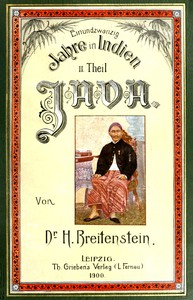
21 Jahre in Indien. Zweiter Theil: Java. by Heinrich Breitenstein
Heinrich Breitenstein's 21 Jahre in Indien. Zweiter Theil: Java is the second volume of his memoirs, covering his years as a doctor in the Dutch East Indies (modern-day Indonesia). We follow him as he arrives in Java in the 1880s, a time when European colonial power was firmly established but deeply resented.
The Story
This isn't a single, plotted narrative. It's a collection of experiences from Breitenstein's life on the ground. He describes his work in hospitals and remote clinics, dealing with tropical diseases, injuries from plantation work, and local illnesses. We meet a huge cast of characters: Dutch administrators clinging to power, Javanese nobility navigating a changed world, Chinese merchants, and everyday villagers. He travels from bustling Batavia (Jakarta) to the interior, witnessing volcanic eruptions, exploring ancient ruins like Borobudur, and getting a firsthand look at the harsh realities of the plantation economy. The "story" is his gradual, often conflicted, understanding of the complex and unequal society he's a part of.
Why You Should Read It
What makes this book special is Breitenstein's voice. He's not a cheerleader for empire. He's a practical man who sees the human cost. His writing is frank, sometimes funny, and often critical. He points out the hypocrisy of colonial policies and the suffering they cause, all while acknowledging his own complicated role. You get amazing, gritty details—like diagnosing strange ailments or bargaining for supplies in a local market—that most history books leave out. It feels incredibly immediate. You're not reading a dry analysis of colonialism; you're seeing its fingerprints on everyday life through the eyes of someone who was there, bandaging its wounds.
Final Verdict
This is a book for the curious traveler and the armchair historian who wants more than dates and battles. It's perfect for anyone interested in real, on-the-ground history, medical stories from another era, or Southeast Asian culture. If you enjoyed the personal observation of books like The Malay Archipelago by Alfred Russel Wallace but want a perspective from someone who lived and worked in the communities for decades, Breitenstein is your guide. Be prepared for a book that's more of a fascinating conversation than a fast-paced novel. It's a slow, rich, and deeply human look at a world that's gone.
No rights are reserved for this publication. Knowledge should be free and accessible.
Kimberly Lopez
1 year agoI was particularly interested in the case studies mentioned here, the nuanced approach to the central theme was better than I expected. A rare gem in a sea of mediocre content.
Karen Harris
1 year agoI've gone through the entire material twice now, and the language used is precise without being overly academic or confusing. I appreciate the effort that went into this curation.
William Moore
1 year agoThe citations provided are a goldmine for further academic study.
Joseph Garcia
9 months agoMy first impression was quite positive because the evidence-based approach makes it a very credible source of information. This is a solid reference for both beginners and experts.










James Martin
5 months agoIt effectively synthesizes complex ideas into a coherent whole.