
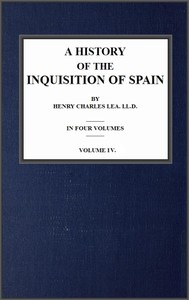
A History of the Inquisition of Spain; vol. 4 by Henry Charles Lea
Let's be clear: this is not a beach read. Henry Charles Lea's fourth volume is a serious, detailed historical study. But if you're curious about how one of history's most infamous institutions actually worked on the ground, it's absolutely gripping in its own way.
The Story
There isn't a traditional plot. Instead, Lea meticulously documents the operational life of the Spanish Inquisition during its later periods. He moves past the big, flashy auto-da-fés and focuses on the system's infrastructure. Think less about torture chambers and more about office management. He explores how local tribunals were organized and funded, how they interacted with royal and local authorities, and the complex legal procedures that governed everything from arrests to property confiscation. The 'story' here is the slow, grinding reality of institutional power—how it collected money, managed property seized from victims, and maintained its influence over Spanish society through a web of bureaucracy and law.
Why You Should Read It
You should read it because it changes your perspective. Popular culture paints the Inquisition with a broad brush of fire and fear. Lea shows us the filing cabinet. By focusing on administration, he makes a powerful point: great cruelty can be systematized, made routine, and powered by mundane things like accounting and legal precedent. It's a sobering look at how evil can wear a clerk's robe. His research is staggering. He built his arguments from original documents, and you feel the weight of that evidence. It’s not always an easy read—the detail is immense—but the insights are worth the effort. You come away understanding that the Inquisition's true power lay not just in terror, but in its ability to become a normal, accepted part of the state and economy.
Final Verdict
This book is for the dedicated history reader, the person who already has a basic understanding of the Spanish Inquisition and wants to go deeper. It's perfect for students of history, law, or sociology who are interested in how institutions function and maintain control. If you love primary sources and detailed analysis, you'll be in heaven. If you're looking for a narrative history with characters and drama, this might feel too academic. But for those willing to dig in, Lea offers a masterclass in historical research and a chillingly relevant study of bureaucratic power.
The copyright for this book has expired, making it public property. Feel free to use it for personal or commercial purposes.
Margaret Garcia
9 months agoThought-provoking and well-organized content.
Nancy Brown
1 year agoAfter finishing this book, the arguments are well-supported by credible references. Truly inspiring.
Emma Rodriguez
5 months agoBeautifully written.
Steven Gonzalez
1 year agoSimply put, the character development leaves a lasting impact. Definitely a 5-star read.





Ashley Davis
1 month agoComparing this to other titles in the same genre, the practical checklists included are a great touch for real-world use. Highly recommended for those seeking credible information.